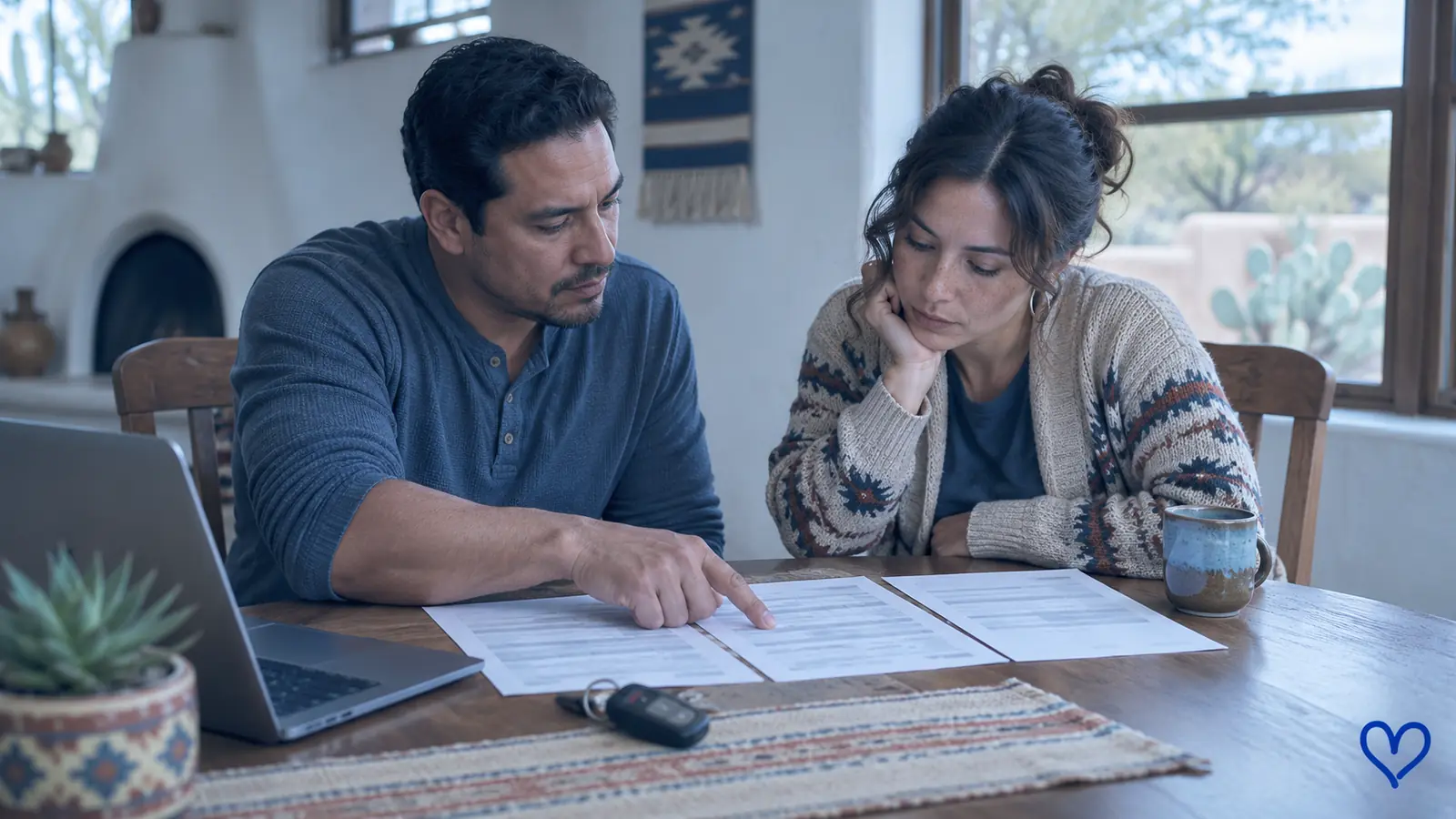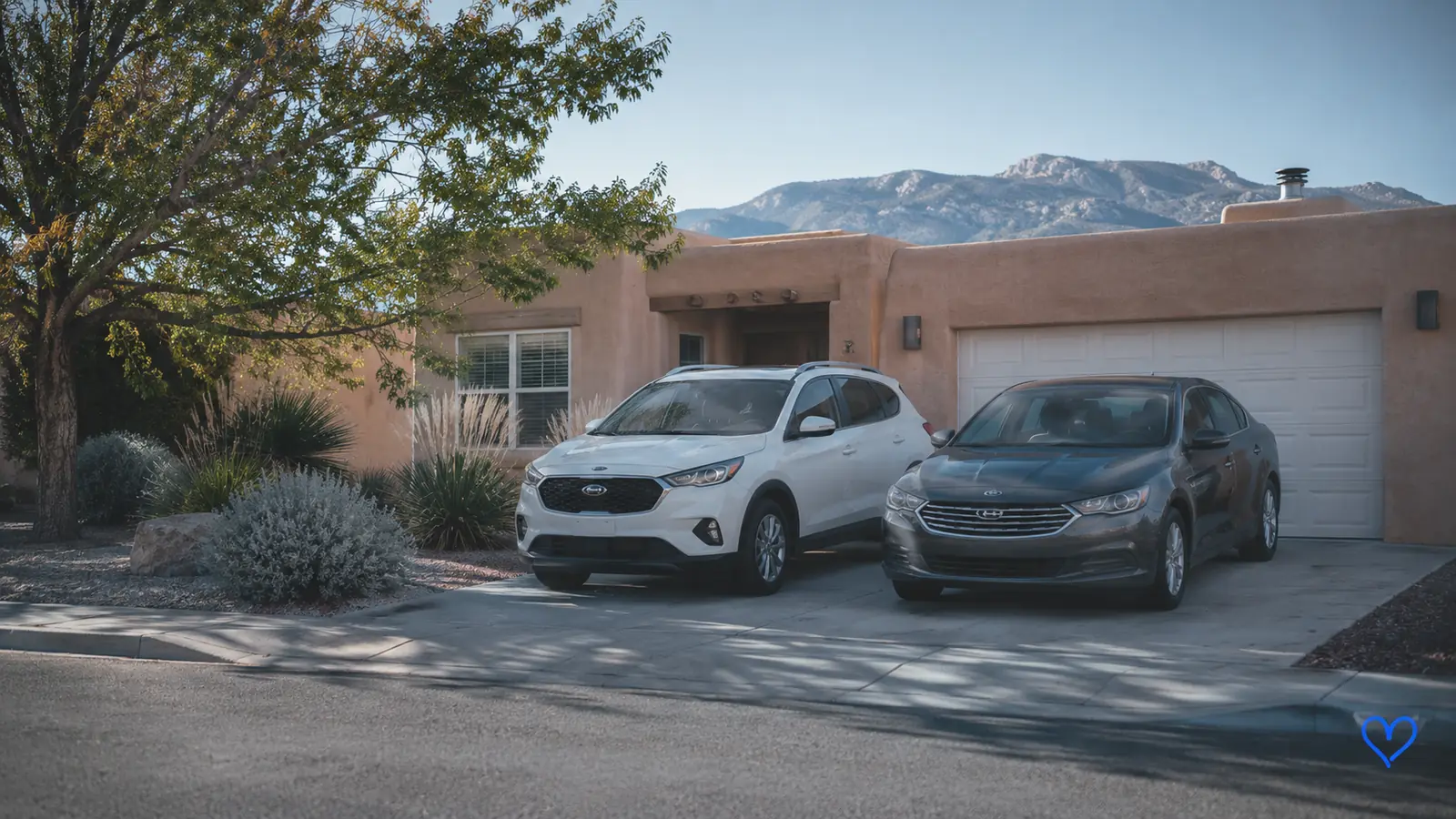
The latest National Association of Insurance Commissioners (NAIC) average-premium supplement available for this review gives New Mexico drivers a useful historical benchmark, though not a personal quote. For 2024, NAIC reported an estimated $1,180.17 annual average expenditure per insured vehicle in New Mexico. Its separate combined average premium measure was $1,421.95. Both figures are statewide aggregates; neither means a particular driver will pay that amount, and they describe different things.
Your actual cost depends on the vehicle, drivers, coverages, deductibles, garaging address, insurer's current rates, and other lawful underwriting factors. To understand the price of a policy in Las Cruces, Sunland Park, Albuquerque, or another New Mexico community, use the statewide data as context and obtain an individualized quote with clearly stated coverage selections.
What do those New Mexico average-cost figures mean?
The NAIC 2024 Auto Database Average Premium Supplement, released in 2026, presents two measurements that should not be confused:
| 2024 New Mexico measure | Annual amount | What it measures |
|---|---|---|
| Average expenditure (Table 4) | $1,180.17 | Total written premiums for liability, collision, and comprehensive divided by liability-insured vehicle years. Not every vehicle in the measure necessarily carried collision and comprehensive. |
| Combined average premium (Table 5) | $1,421.95 | The sum of average premiums for liability, collision, and comprehensive. This is a constructed average for those three coverage types, not a universal retail package called “full coverage.” |
NAIC uses aggregated insurance statistics, not a quote for a specific driver. It does not select one universal liability limit or deductible, and its figures do not measure the premium charged today for your application. Do not use either amount as a guaranteed price, a claim that Safe House Insurance can beat the average, or an exact prediction of six-month premiums. The data year is 2024 even though the report was issued later.
What a premium actually is
The premium is the price charged for an insurance policy over a stated term. Companies may let customers pay the full term or use installments, sometimes with different billing arrangements or fees. A monthly payment should not be mistaken for the total cost of the policy. Ask for the term, total premium, initial payment, installment schedule, and any applicable fees.
Your premium is not the same as your deductible. The premium pays for the policy; the deductible may be a separate amount you are responsible for after certain covered losses. A low-looking premium paired with a deductible you cannot afford may not meet your needs.
Driver history and household information
Insurers generally consider driving records, experience, previous claims, and information about drivers in the household, subject to applicable law and their filed rating practices. A person with a different driving record or a newly licensed driver at home may receive a different quote even for the same car.
Be accurate when listing regular drivers and household members. Omitting information to obtain a lower preliminary number can cause problems when the company verifies the application or a claim arises. Ask how the insurer handles any driver who has regular access to the car.
Your car, how you use it, and where it stays
Vehicle characteristics can influence physical-damage pricing: repair costs, replacement value, safety or anti-theft equipment, and other insurer-specific factors can matter. Two trims of the same model may not be priced identically. Your annual mileage and whether the vehicle is used for commuting, personal trips, deliveries, or business activities may also be relevant.
The garaging address is where the vehicle normally stays, not simply a convenient mailing address. Pricing may reflect local claim patterns and other geographic factors. This means a quote for one New Mexico ZIP code should not be assumed to apply at another address. If you move, update the insurer promptly.
Hypothetical example: living in Sunland Park and working in El Paso
Imagine a hypothetical driver who lives in Sunland Park, New Mexico, keeps a sedan there most nights, and commutes to a job in El Paso, Texas. The Texas workplace does not automatically replace the New Mexico garaging address. The applicant should accurately describe their residence, where the vehicle is normally kept, the commute, mileage, and any other information the insurer requests. Because the car regularly crosses a state line, the driver should ask whether the proposed policy fits that actual use. If the vehicle is instead kept most nights at an El Paso address, the information provided to the insurer must reflect that different situation. Choosing a ZIP code simply to obtain a lower quote can create serious problems later.
Your coverage choices affect price
New Mexico's ordinary liability requirement is 25/50/10, but you can ask about higher limits. Collision and comprehensive, if selected, may add cost while addressing types of covered loss to your own car. Uninsured/underinsured motorist coverage and other optional protections require separate decisions.
Increasing a physical-damage deductible may affect the quote, but it also changes what you would need to pay toward a covered loss. Instead of comparing a minimum-liability quote with a higher-limit policy that has collision and comprehensive, request two proposals with the same coverages, deductibles, drivers, vehicles, and dates.
What about discounts?
Insurers may offer discounts or pricing features for circumstances such as multiple insured vehicles, qualifying safety devices, an eligible defensive-driving course, or combining eligible policies. Availability, criteria, and savings differ by company and by applicant. A discount is not a promise that the final rate will be cheaper than every competitor's.
Ask an agent to identify discounts for which you may qualify, and confirm them in the written quote. Never complete a course or purchase a device solely on the assumption that a discount will pay for it.
A practical quote-comparison example
Imagine two New Mexico drivers requesting coverage for a sedan. The first drives 5,000 miles per year and requests $1,000 physical-damage deductibles. The second commutes much farther and requests $500 deductibles. Even if their vehicles appear similar, the proposals may differ. That does not establish that either person is being treated unfairly; the insurer may be using different approved factors and assumptions.
Now imagine one company quotes six months while another gives a 12-month total. Comparing the two headline prices without checking the term can be misleading. Put the total term cost and the same coverage details on one worksheet.
A checklist before requesting a rate
Have the correct VIN, vehicle year and model, garaging ZIP code, approximate yearly mileage, intended vehicle use, names and relevant information for drivers, and any loan or lease requirements ready. Know the liability limits and deductibles you would like to compare. Tell the agent about prior coverage accurately, including any lapse.
When the quote arrives, confirm whether it is preliminary or final, what verification the insurer may require, and when coverage would actually become effective if you proceed. A quote by itself does not activate insurance.
If your premium seems unexpectedly high
Ask which assumptions appear on the proposal. Check for incorrect vehicle information, outdated addresses, duplicated drivers, or coverage choices you did not intend. Discuss available alternatives without removing protection you need or violating lender requirements. You can request a new quote, but no agency can guarantee a particular premium or approval.
Ready for a quote based on your actual car and driving information? Request a New Mexico auto insurance quote through Safe House Insurance to compare available coverages and payment terms. State averages are not individual offers; actual pricing is carrier-specific.
Sources

Safe House Insurance is an independent insurance agency in El Paso, Texas, licensed in Texas and New Mexico.
Have Questions About Your Insurance Options?
Our team can help you explore available coverage options based on your needs.