Car insurance can help protect you financially after certain accidents or unexpected events. But not every policy covers the same things. In Texas, understanding the difference between required liability insurance and optional protections is a useful first step.
Liability insurance: protection for damage you cause to others
Texas generally requires drivers to demonstrate financial responsibility. Most drivers do this by purchasing auto liability insurance. Liability coverage can pay covered injuries or property damage that you are legally responsible for causing to other people, up to the policy limits. It generally does not pay to repair your own car after an accident you cause.
Texas's minimum liability limits are commonly written 30/60/25: $30,000 for bodily injury per person, $60,000 for bodily injury per accident, and $25,000 for property damage per accident. Those are minimums, not a recommendation for every driver. A serious accident can exceed them.
Collision: damage to your car in a crash
Collision coverage may help pay to repair or replace your insured vehicle after a covered collision, subject to your deductible and the policy's terms. A deductible is the part of a covered claim you pay yourself. Collision is generally optional under Texas law, although a lender may require it on a financed vehicle.
Comprehensive: certain non-collision losses
Comprehensive coverage—sometimes called other-than-collision—may apply to covered theft, fire, hail, vandalism, or other listed losses. It usually has its own deductible. It does not mean that every possible type of damage is covered.
Other coverages worth understanding
Depending on the policy, options may include uninsured/underinsured motorist protection, personal injury protection, medical payments, roadside assistance, and rental reimbursement. Each one serves a different purpose, and limits and exclusions matter.
How to check what you actually bought
Look at the declarations page of your insurance policy. It lists the vehicles, coverages, limits, deductibles, and premium. Then review the policy wording, because the declarations page is only a summary.
An everyday example: two kinds of damage, two different coverages
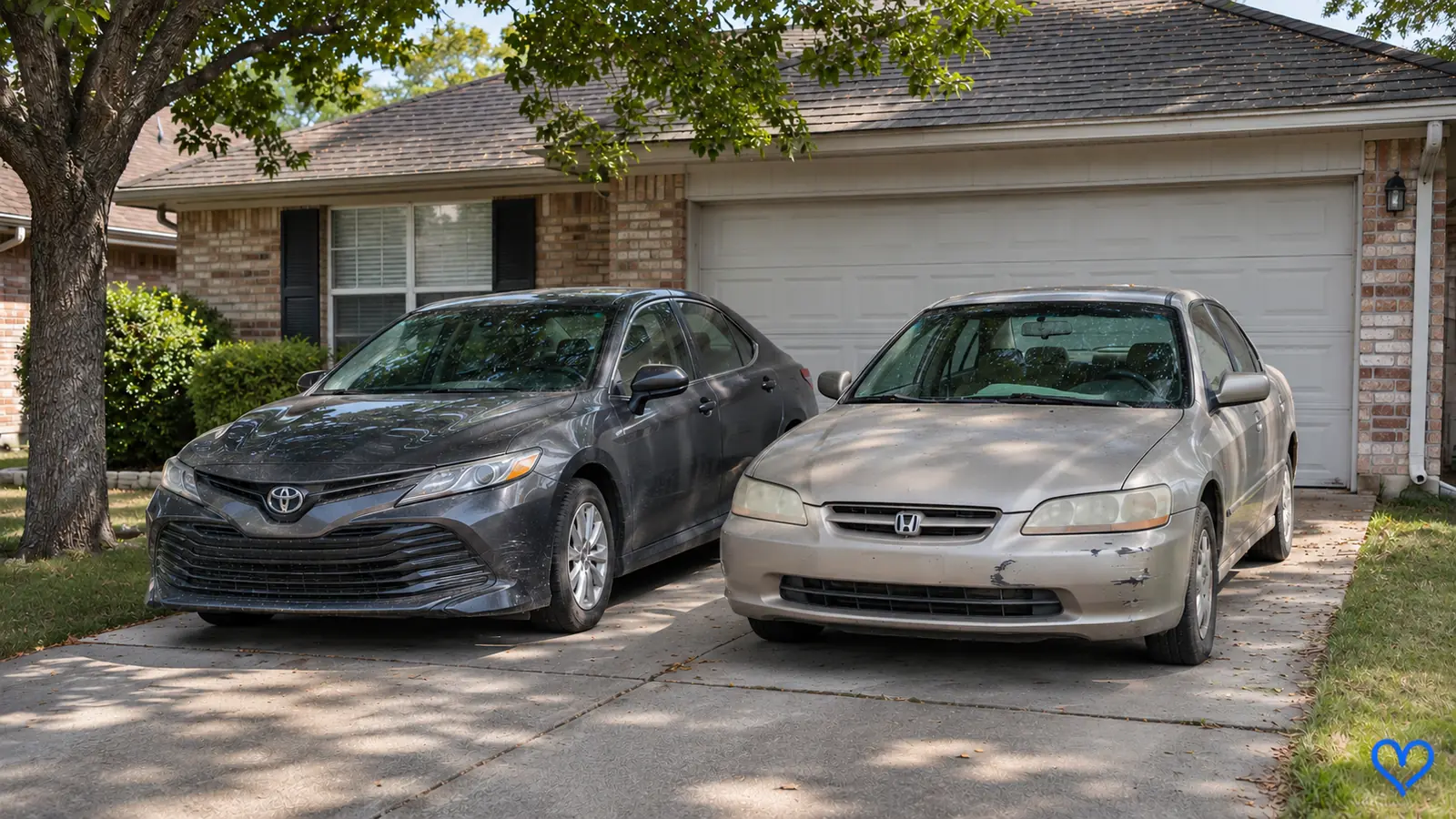
Suppose a Texas driver loses control in a parking lot, hits another parked car, and damages the front of their own vehicle. The property damage liability portion of the policy may respond to covered damage to the parked car if the driver is legally responsible. The driver's own vehicle is a separate question: collision coverage may respond if it is included and the loss is covered. A liability-only policy usually will not pay for the driver's own collision repairs.
Now imagine the same vehicle is damaged by hail while parked. That is generally considered a comprehensive-type loss rather than a collision loss. Merely having liability and collision does not necessarily provide the same protection as having comprehensive too. Every example assumes the policy was active and no relevant limitation or exclusion applies.
What about an accident caused by an uninsured driver?
Uninsured and underinsured motorist protections are designed for certain situations involving drivers who have no insurance or insufficient liability limits. The kinds of expenses covered, the deductibles, the limits, and any rejection or selection rules deserve separate attention. Never assume that your own collision, liability, and uninsured motorist coverages are interchangeable: they serve different purposes.
What insurance may not cover
Insurance is not a maintenance plan. Normal wear and tear, mechanical breakdown, intentional acts, and uses excluded by the policy are examples of issues that can fall outside coverage. Business or delivery use may require special consideration. Personal belongings stolen from a vehicle are not automatically covered by the auto policy; some homeowners or renters policies may respond, subject to their terms.
Five questions to ask your agent
- Which coverages are included, and which have I declined?
- What are the limits for injuries and property damage caused to others?
- What are my collision and comprehensive deductibles?
- Are all household drivers and the vehicle's actual use reported accurately?
- Which exclusions or endorsements could make an important difference?
Reading the declarations page together with your agent can turn a confusing set of abbreviations into an understandable plan. The goal is to know what you purchased before an accident, not to discover important limitations afterward.
What happens after you submit a claim?
The insurer typically gathers information about what happened, reviews the applicable policy, evaluates the loss, and determines whether and to what extent coverage applies. It may request photographs, a police report, repair estimates, or other records. Filing a claim does not itself guarantee payment. The insurer may find that a loss is excluded, subject to a deductible, exceeds a limit, or requires further investigation.
For example, the existence of comprehensive coverage does not establish the value the insurer will pay for a stolen vehicle. Valuation provisions, deductible amounts, lienholder interests, and other terms can matter. Keep copies of your documents and communicate accurately during the claim.
How to make a coverage review less intimidating
You do not need to memorize insurance terminology. Start with three questions: “What damage could I cause to others?”, “What could happen to my own car?”, and “What expenses might I have while recovering from a loss?” Then see which part of the policy responds to each question. An agent can explain available options, but the insurer and the written contract ultimately determine the policy's terms and claim handling.
Need help comparing coverage options? Safe House Insurance can help you review available auto insurance options in Texas. A quote is not a promise of a particular price, eligibility, or coverage.
Sources

Safe House Insurance is an independent insurance agency in El Paso, Texas, licensed in Texas and New Mexico.
Have Questions About Your Insurance Options?
Our team can help you explore available coverage options based on your needs.