Buying a home involves many moving pieces: inspections, mortgage paperwork, title work, moving plans, and a closing date. Homeowners insurance often appears as another item on that list. But a policy should be evaluated as more than a document to satisfy the lender. It is also a long-term financial decision about the house, its contents, and possible legal responsibilities.
TDI explains that Texas law does not generally require homeowners insurance, but mortgage lenders commonly do as a condition of financing. The lender's requirements and your broader coverage preferences are related—not identical—questions.
Start shopping before the closing date
Waiting until the last moment can limit your ability to compare forms and respond to inspections or underwriting questions. As soon as the property details are reasonably reliable, begin asking what insurers need to prepare a proposal. A preliminary quote may not be a final offer, and a company may need verification before it will issue coverage.
Gather the prospective address, year built, square footage, construction type, roof age and material, prior renovation details, intended occupancy, and lender information. State clearly whether you plan to live there as your primary residence, rent it out, renovate it before moving in, or leave it vacant for a period. Those uses can lead to different underwriting and policy needs.
Your lender's requirements are only part of the comparison
Lenders frequently require a homeowners policy and proof that their mortgage interest is properly identified. They may specify limits, replacement-cost features, or other conditions. Confirm the exact lender wording and whether the insurer can satisfy it.
However, a policy that satisfies a lender does not necessarily address every risk the buyer cares about. Review liability limits, contents protection, additional living expenses, roof valuation, deductibles, water exclusions, and any flood or separate wind concerns.
Do not confuse purchase price with dwelling replacement cost
If you buy a house for $350,000, the insured dwelling limit is not automatically $350,000. Purchase price may reflect land value, local demand, and market circumstances. Reconstruction cost depends on the house's physical characteristics and the cost of rebuilding.
The lender's outstanding balance is also a different number. Discuss the insurer's reconstruction-cost estimate and correct property data before selecting a dwelling limit. If a house has unique finishes or a major addition, those details can affect rebuilding cost and should not be ignored.
Roof age and condition deserve special attention
The inspection report and seller disclosures can reveal questions about roof age, prior repairs, or visible damage. Insurance carriers may ask for additional roof information, apply an ACV endorsement, require an inspection, or set specific underwriting terms. The fact that a home is being sold does not mean every insurer will accept it unchanged.
TDI recommends checking whether roof losses are settled on replacement cost or actual cash value and examining the wind/hail deductible. If the roof will need repairs, find out whether work must be completed before coverage can be issued or continued. Do not promise the closing can proceed based solely on an online quote.
Are the deductibles affordable after closing?
A new homeowner may face moving expenses, appliance replacements, and other costs. That makes the deductible a practical budget question. If the hypothetical dwelling amount is $330,000 and a wind/hail deductible is 2% of that limit, the simple deductible amount is $6,600. A different 1% option would equal $3,300 under that same basis.
These are fictional math examples, not statements of what an insurer will offer. Ask which deductible applies to which cause of loss, whether the roof uses ACV, and how much savings you could actually keep available after closing.
Check the property's location and water exposure
Homeowners insurance generally does not cover flooding, so the flood insurance decision deserves separate consideration. Look at official flood-risk information, drainage patterns, property elevation, past documented water issues when available, and any lender requirements. A location outside a mapped high-risk zone does not promise the property will never flood.
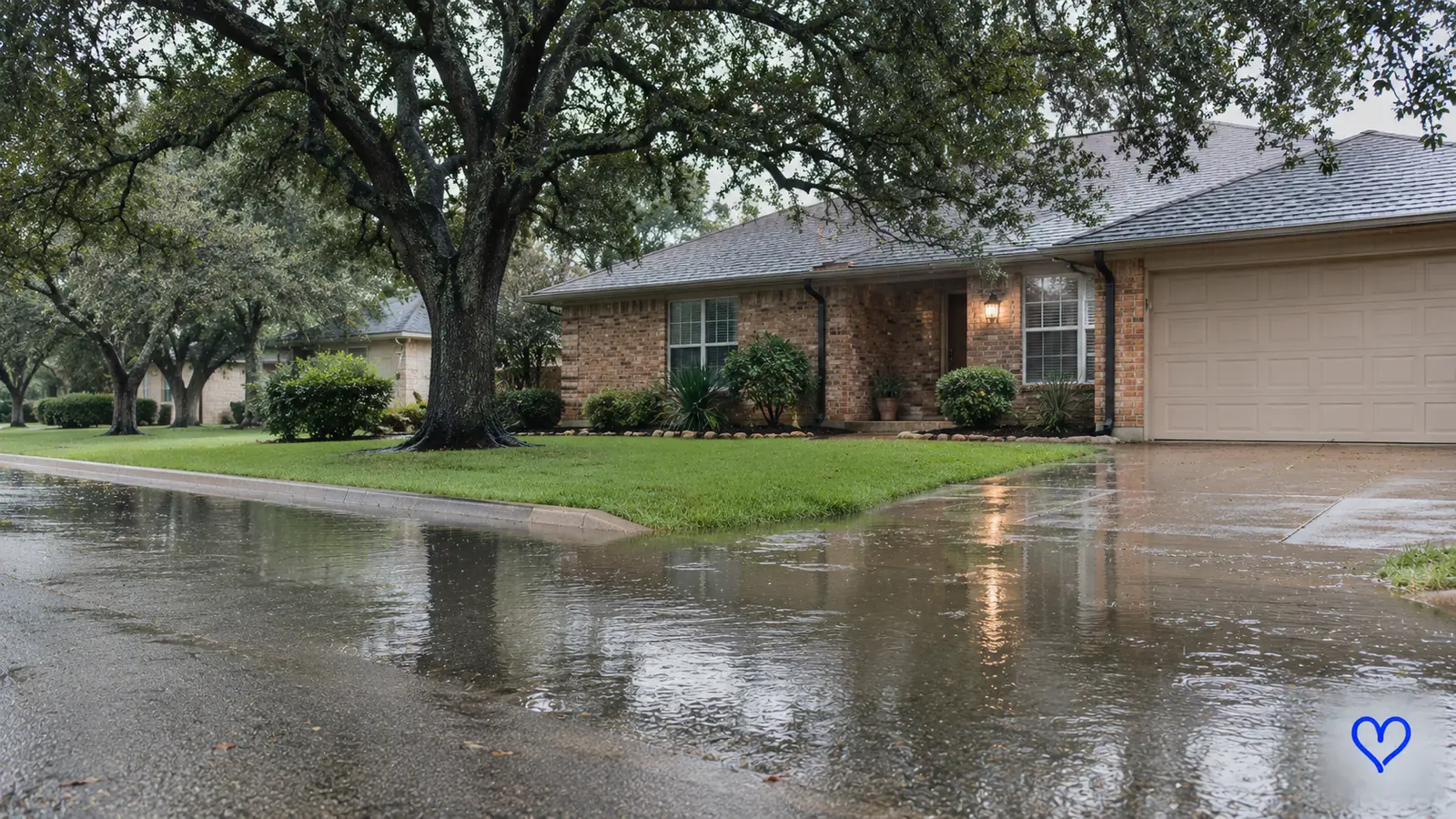
For a hypothetical buyer moving into an El Paso house, perhaps the lot is near a low point where stormwater collects during heavy rain. That fact could prompt more questions about drainage and separate flood coverage, even if a regular homeowners quote is available. The example is not an assertion about any actual neighborhood or client property.
For coastal Texas buyers, also ask whether wind/hail insurance is included in the homeowners form or requires a separate policy through an appropriate source. One statewide buying checklist cannot replace region-specific questions.
What happens at closing and after move-in?
An insurance premium may be paid through closing funds or an escrow arrangement with a mortgage servicer, depending on the loan. Ask the lender and insurer what payment and proof are required. Do not assume an escrow estimate means the policy has been issued or coverage is already in force.
Confirm the exact effective date and time, named insured, insured address, mortgagee information, coverages, deductibles, and initial payment status. After moving in, review the policy documents and report material changes such as major renovations, new structures, a home business, or changes in occupancy as required.
A homebuyer checklist you can actually use
| Before closing | Question or document to confirm |
|---|---|
| House details | Year built, size, materials, roof information, intended occupancy |
| Replacement estimate | Dwelling limit based on reconstruction, not just selling price |
| Roof terms | Replacement cost or ACV; any inspection or special deductible |
| Water and flood | Ordinary exclusions, backup endorsement, separate flood need |
| Personal belongings | Contents limit, valuation, special valuables restrictions |
| Liability | Limits and relevant household exposures |
| Lender details | Mortgagee wording, payment/escrow, evidence of insurance |
| Effective date | Insurer confirmation that coverage is actually issued and active |
The checklist helps organize questions, not certify that a particular policy meets all closing requirements. If the loan officer, insurer, or title professional requires additional documents, follow their current instructions.
Comparing quotes without losing the closing timeline
Request comparable proposals early enough to understand the differences. Review total premium, payment schedules, insurer inspections, coverage forms, deductible amounts in dollars, and exclusions that matter to the property. If a quote changes after new information or inspection, discuss it promptly with the insurer and lender.
No policy should be described as guaranteed to bind until the insurer confirms issuance, conditions, payment, and effective date. If the property cannot be insured under one carrier's rules, the available alternatives and their terms must be evaluated honestly.
Buying a house in Texas and reviewing insurance before closing? Contact Safe House Insurance with the property's details and your lender's requirements to request a homeowners quote and compare deductibles, roof provisions, and effective dates. The insurer determines whether and when a policy can be issued.
Sources

Safe House Insurance is an independent insurance agency in El Paso, Texas, licensed in Texas and New Mexico.
Have Questions About Your Insurance Options?
Our team can help you explore available coverage options based on your needs.