Heavy rain can damage a house in more than one way. It may enter after wind tears open part of a roof, back up from a drain, or rise from the street and flow through a doorway. A homeowner could call all three situations “storm damage,” but insurance contracts may treat them differently.
TDI explains that an ordinary homeowners policy generally does not insure flood damage. A separate flood insurance policy is usually needed for that risk. That does not mean every rain-related incident is excluded from homeowners insurance, and it does not mean every situation with standing water qualifies under a flood policy. The cause and pathway of water matter.
What does a typical homeowners policy address?
Home policies commonly cover particular sudden events listed or defined in the contract, subject to exclusions and deductibles. Depending on the form, a covered wind event that opens a roof and allows rain into the living area might be treated differently from water that rose over the ground outside.
A typical home policy also contains dwelling, contents, liability, and other coverages; flood coverage is a separate insurance question. Review endorsements because water-backup coverage, for example, should not be confused with external flooding.
What is flood insurance designed to address?
Flood insurance is generally intended for qualifying flood losses from water that rises or spreads over normally dry land, subject to the policy's definition of flood, covered property, limits, deductibles, and exclusions. The National Flood Insurance Program (NFIP) and participating private insurers may offer differing forms and eligibility rules.
Do not assume a flood policy automatically replaces everything damaged, or that every outbuilding, finished basement item, temporary housing expense, and personal belonging is insured without restriction. Building and contents protection can involve separate limits, eligibility, and terms.
Three hypothetical Texas rain scenarios
Scenario A — Rain enters through a storm-created roof opening. Strong winds damage shingles, and water enters the ceiling through that damaged section. The owner should review the homeowners policy's wind/rain terms, the actual cause, and any applicable wind/hail deductible. A claim is not guaranteed.
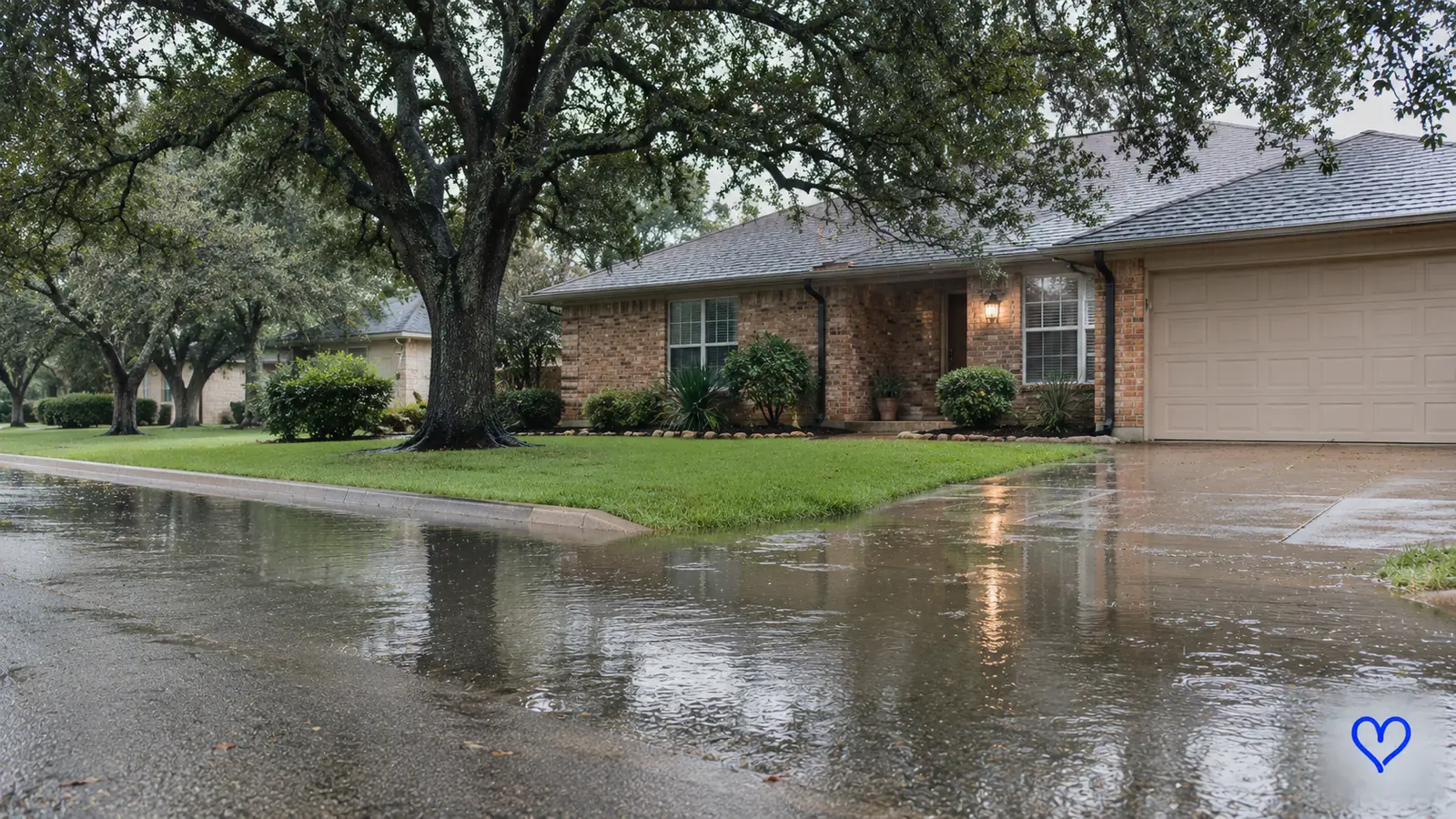
Scenario B — Water flows from the street into the house. A severe downpour overwhelms local drainage and water crosses a driveway threshold into a room. That is the type of rising outside-water event that raises a flood-insurance question. A conventional homeowners policy usually excludes flooding, even if the rainfall was extraordinary.
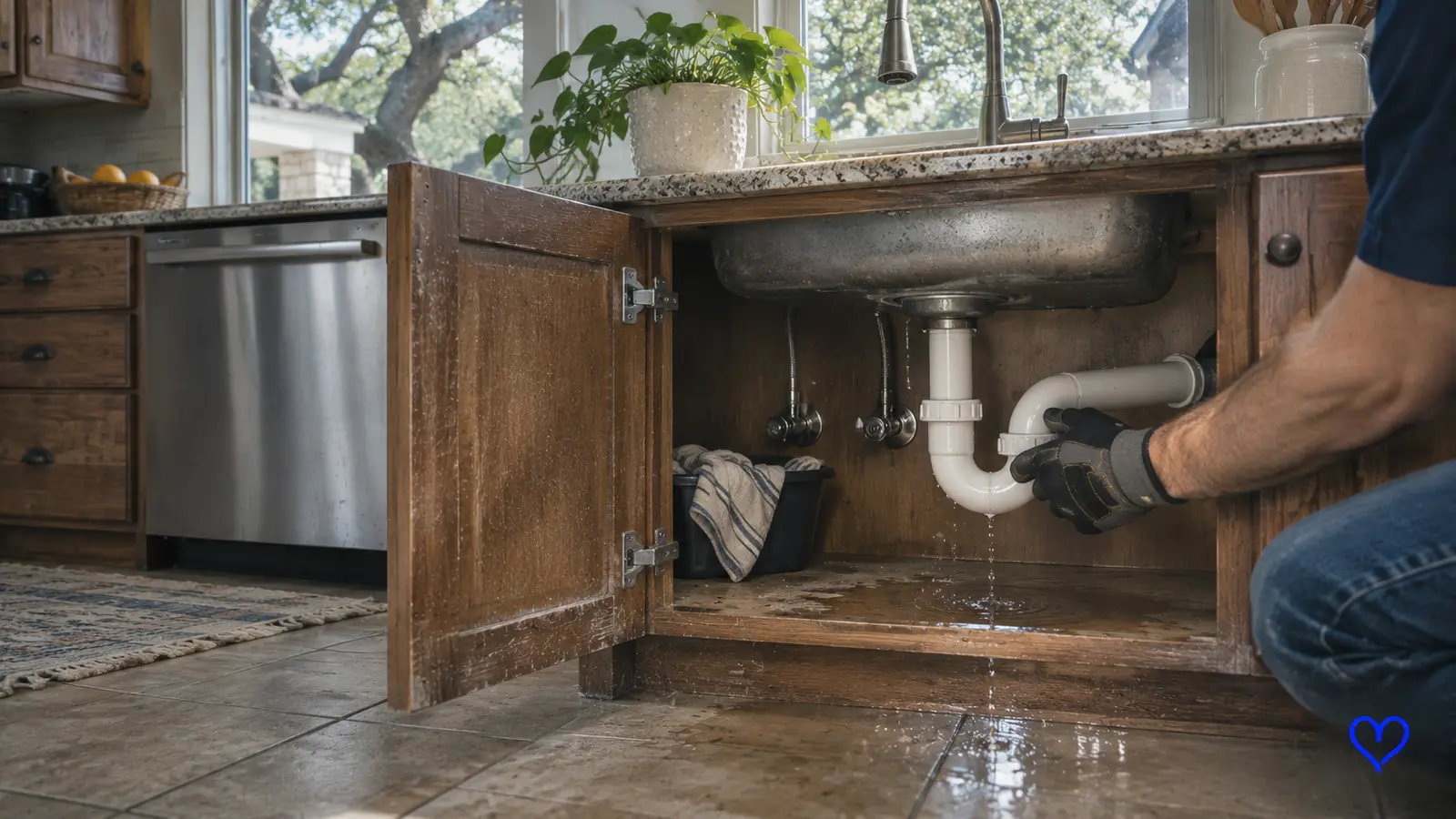
Scenario C — Sewage backs up through an indoor drain. This may involve a separate water-backup endorsement or exclusion, not necessarily a flood policy. The source of water and the contract wording must be examined.
None of these invented examples is an actual Safe House Insurance customer or a prediction of coverage.
Do you need flood insurance outside a mapped flood zone?
Flood maps are useful risk tools, but they do not mean water can never reach a property outside a designated high-risk zone. TDI notes that flooding can happen away from the most commonly mapped areas. In Texas, intense rainfall, urban drainage, terrain, and local changes in development can influence exposure.
A hypothetical El Paso homeowner may live nowhere near the Texas coast but still want to examine drainage patterns near their lot, a nearby arroyo, a low driveway, or street runoff. Mentioning El Paso here is not an assertion that every neighborhood shares the same risk. A property-specific risk assessment and maps provide better context than a citywide generalization.
Mortgage requirements and optional decisions
TDI explains that a lender may require flood coverage for certain financed properties in designated flood zones. Requirements vary with loan and property circumstances. Outside such mandatory areas, a homeowner may still consider flood coverage based on risk and financial resources.
Do not rely on a lender's decision as a guarantee that no flood loss will occur. Conversely, a designated zone is a risk classification, not a promise that a policy will be issued or a claim paid.
Waiting periods require early planning
Flood policies may have a waiting period before they become effective. TDI describes a common 30-day waiting period for many flood policies, though exceptions and different rules can apply. Confirm the precise waiting period and effective date on the proposed policy and do not assume that buying coverage shortly before a storm makes an earlier or imminent loss eligible.
This is why deciding whether to obtain flood insurance is usually more useful as part of routine planning than as a last-minute reaction to a weather forecast.
What to compare across homeowners and flood proposals
| Question | Homeowners policy | Separate flood policy |
|---|---|---|
| What causes of water loss qualify? | Review wind-created openings, sudden pipe losses, exclusions | Review definition of flood and qualifying water source |
| Which property is insured? | Dwelling, belongings, and listed other coverages | Check building, contents, and excluded property categories |
| Are living expenses available? | Possible ALE under qualifying covered loss | Do not assume ordinary flood forms include ALE |
| What deductible applies? | Policy's relevant peril deductible | Separate flood policy deductible(s) |
| When does coverage start? | Insurer-confirmed effective date | Insurer-confirmed date plus any waiting period |
| Does one substitute for the other? | Usually excludes flooding | Not a general replacement for homeowners insurance |
The table summarizes questions, not universal coverage terms. Compare the actual forms you are considering.
When both kinds of insurance matter
Flood insurance is not a substitute for liability protection, fire coverage, or the other features a homeowners policy may contain. Likewise, selecting a homeowners policy with robust dwelling limits will not automatically address excluded external flooding. The two products may serve different, complementary purposes when appropriate and available.
After a water loss, document conditions safely, mitigate further damage when practical, and contact the applicable insurers to report the event accurately. If the cause is uncertain, do not deliberately misdescribe outside floodwater as a roof leak—or vice versa—in an attempt to change how a claim is treated.
Concerned about water rising outside your Texas home? Talk with Safe House Insurance about homeowners options and whether requesting a separate flood quote or specialist referral makes sense for your property. Eligibility, effective dates, waiting periods, and coverage depend on the policy and provider.
Sources

Safe House Insurance is an independent insurance agency in El Paso, Texas, licensed in Texas and New Mexico.
Have Questions About Your Insurance Options?
Our team can help you explore available coverage options based on your needs.