A homeowner may hear “your deductible is two percent” and assume that means two percent of the repair bill. That can be a costly misunderstanding. Texas home policies may use fixed-dollar deductibles, percentage deductibles, or different deductibles for different causes of loss. You should know the actual dollar amount before selecting a policy.
The Texas Department of Insurance urges consumers to translate percentages into dollars and understand which deductible applies to a given type of claim. The math is straightforward once the policy's defined base is clear. The consequences of choosing the deductible, however, depend on your savings, lender obligations, and appetite for unexpected expenses.
What is a deductible?
In a typical covered property claim, a deductible is the portion of the loss assigned to the policyholder under the contract. It is not usually an amount the insurer sends you and then asks you to return. Instead, the insurer calculates the eligible loss under the policy and accounts for the deductible when determining any claim payment.
A deductible generally applies per claim or occurrence as stated in the contract, rather than operating like an annual fund that you fill once. Different causes of loss may have different rules, deductibles, or limits. If a covered loss is below the applicable deductible, there may be no insurance payment even though the cause itself was insured.
Flat-dollar versus percentage deductibles
A flat deductible might be $1,000 or $2,500. A percentage deductible often uses the insured dwelling amount, not the eventual repair invoice; check the policy for the exact definition. For a home with $300,000 in dwelling coverage, a 2% deductible would translate to $6,000 under that simple basis.
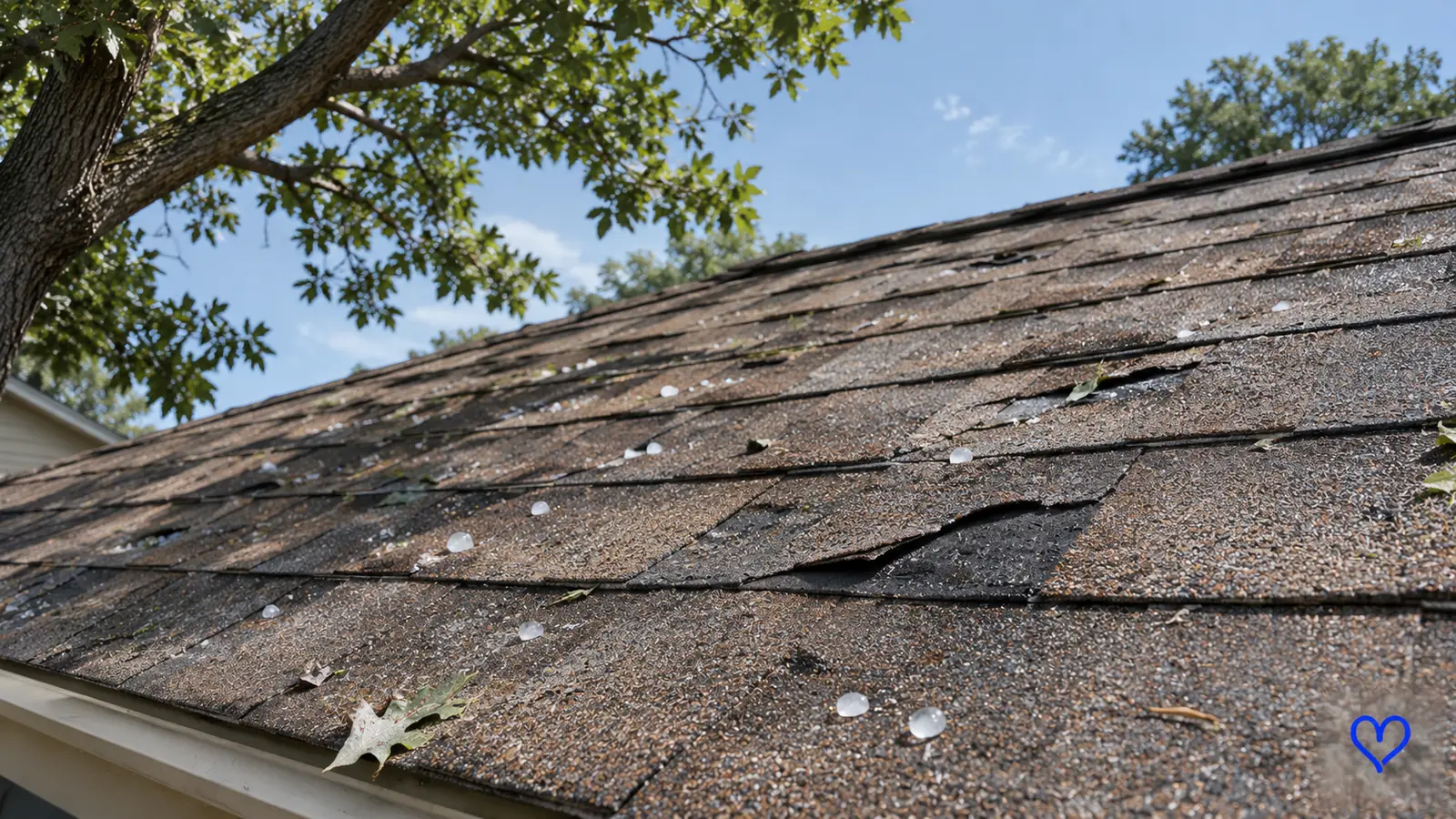
Hypothetical example: hail damages a Texas roof
Imagine a fictional home insured for $300,000 in dwelling coverage. A storm causes a covered $14,000 roof loss. To isolate the deductible math, ignore depreciation and other policy adjustments in this illustration.
| Hypothetical deductible | Dollar amount | Simple result on $14,000 eligible loss |
|---|---|---|
| $1,000 flat deductible | $1,000 | $13,000 after deductible |
| 1% of $300,000 dwelling amount | $3,000 | $11,000 after deductible |
| 2% of $300,000 dwelling amount | $6,000 | $8,000 after deductible |
| 5% of $300,000 dwelling amount | $15,000 | $0 after deductible |
These are illustrative calculations only, not claims, rates, benefit promises, or a representation that all four deductibles are available. The actual contract may apply depreciation, special terms, or an entirely different deductible basis.
Why wind and hail may have a separate deductible
Texas properties face a variety of weather exposures. A home policy might show one deductible for many ordinary covered losses and another for wind or hail. On some coastal policies, named-storm, hurricane, or windstorm insurance arrangements add further complexity.
For instance, a dwelling could list a $2,500 “all other perils” deductible and a 2% wind/hail deductible. If that example's dwelling limit were $300,000, the two amounts would be $2,500 and $6,000, respectively. The smaller number does not necessarily apply when hail damages the roof. Ask which wording and triggering event controls.
Does increasing a deductible always save money?
In general, accepting more out-of-pocket risk may lower a premium, but no particular reduction is guaranteed. A carrier may not offer every deductible option, and differences can depend on location, underwriting, policy form, age or condition of the home, and insurer rules.
The correct comparison includes both sides: what you might save in premium during the policy term, and the amount you could afford to pay after a covered loss. A $900 annual premium difference may sound attractive, but an added $4,000 of deductible responsibility would require a meaningful decision about savings and risk. That comparison is hypothetical; it is not a promised discount or market estimate.
Claim amount is not always the contractor's entire estimate
Even after understanding the deductible, a homeowner must consider what repairs the policy regards as covered. A contractor may recommend additional upgrades, unrelated maintenance, or replacement of materials that were already deteriorated. The insurer may evaluate a different qualifying scope.
Similarly, if roof settlement is on an actual-cash-value basis, depreciation can reduce a preliminary valuation independently of the deductible. A higher deductible and ACV settlement can combine to leave a larger homeowner contribution than either term suggests alone.
An El Paso-specific reason to examine the numbers
Consider a hypothetical owner in El Paso who keeps several thousand dollars set aside for household emergencies. Their roof policy offers a wind/hail percentage deductible; it is important to calculate its dollar amount using the correct dwelling limit. That exercise is useful even if most years bring no claim, because an unexpected storm could require paying that sum before insurance funds contribute.
This is not a prediction that the home will sustain a storm loss or that a specific El Paso rate will apply. It is a practical budgeting check. Homeowners elsewhere in Texas can use the same method with their own declarations page.
A five-question deductible checklist
- Which deductible applies to fire, theft, accidental water damage, wind, and hail respectively?
- For every percentage deductible, what dollar figure does it equal today?
- If my dwelling coverage increases at renewal, how would that change a percentage deductible?
- Do the roof's settlement basis and cosmetic-damage exclusions add costs beyond the deductible?
- What amount could my household comfortably pay after an unexpected covered loss?
Keep a copy of the declarations page and endorsements so you can see the actual deductible at claim time. A quote summary or monthly payment alone is not enough.
If two losses happen, do deductibles add up?
Do not assume one deductible covers every repair during an entire policy year. Imagine a hypothetical home with a covered kitchen fire in February and a separate covered hail event in August. Depending on the policy's definition of an occurrence, two independently evaluated losses may involve two applicable deductibles. If wind damages the roof and rain damages the interior during the same event, the analysis may be different. Ask the adjuster which cause-of-loss and occurrence provisions control rather than guessing from the calendar dates.
Likewise, a contractor's estimate below the deductible does not automatically answer whether reporting an incident is appropriate. Review the policy's notice obligations, the extent of damage, potential concealed damage, and your questions about future repairs with the insurer. A decision to file or not file deserves accurate information; there is no universal rule that a small repair should always become an insurance claim.
Wondering what a 1% or 2% deductible would mean for your home? Ask Safe House Insurance to compare available Texas homeowners quotes with wind/hail and other deductibles shown in dollars. The insurer determines which options and prices are available.
Sources

Safe House Insurance is an independent insurance agency in El Paso, Texas, licensed in Texas and New Mexico.
Have Questions About Your Insurance Options?
Our team can help you explore available coverage options based on your needs.