A damaged roof is one of the most stressful home maintenance problems because it protects everything underneath. Texas homeowners commonly ask whether their insurance pays after hail, wind, or a fallen tree damages shingles. The honest answer is it depends on what caused the damage and on the actual policy.
TDI's roof guidance explains that certain storm-related roof damage may be covered, but an insurer generally will not pay for a new roof simply because the existing one is old or worn. The policy's deductibles, settlement terms, exclusions, and inspection findings matter just as much as the type of storm.
What caused the roof damage?
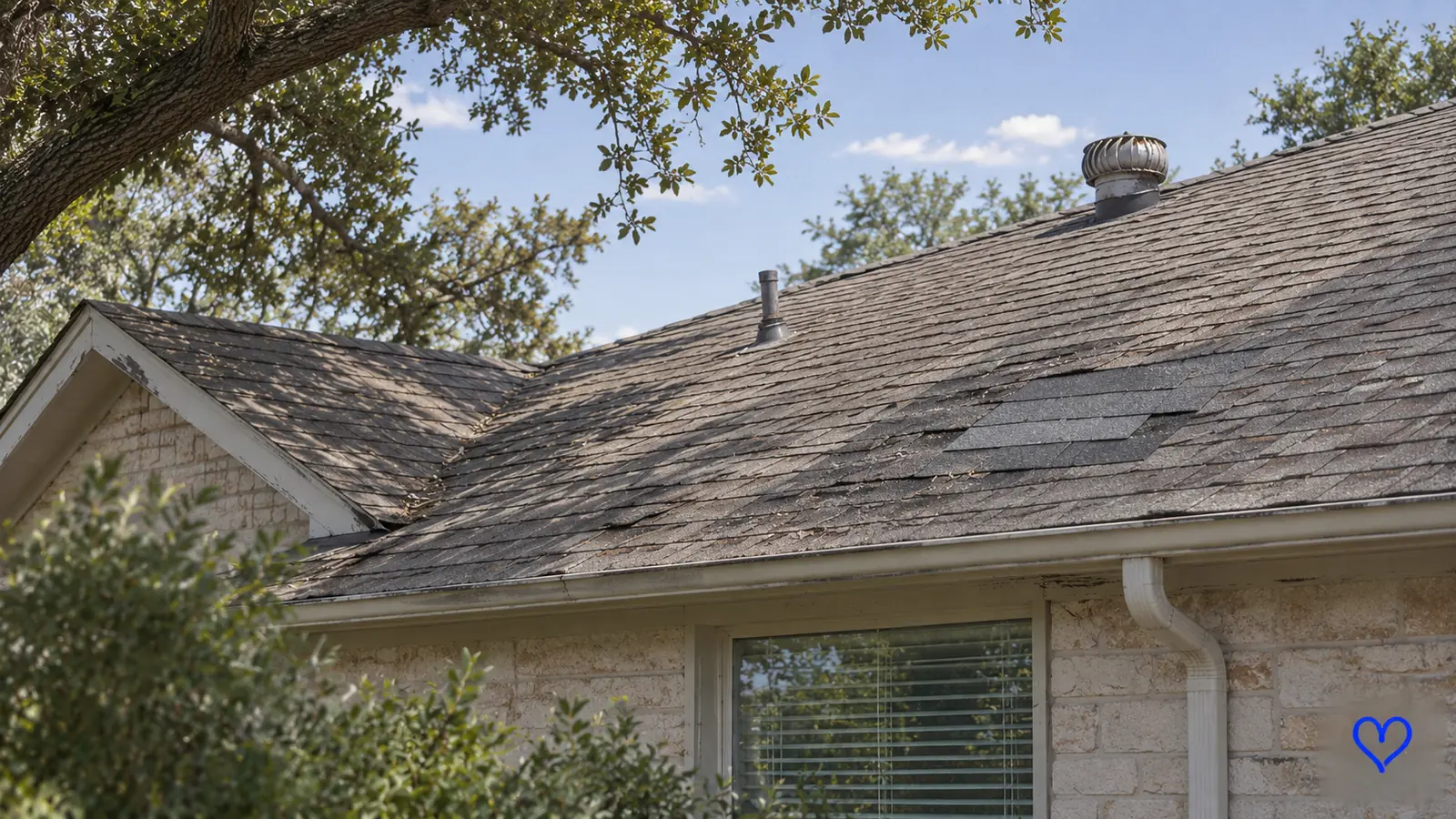
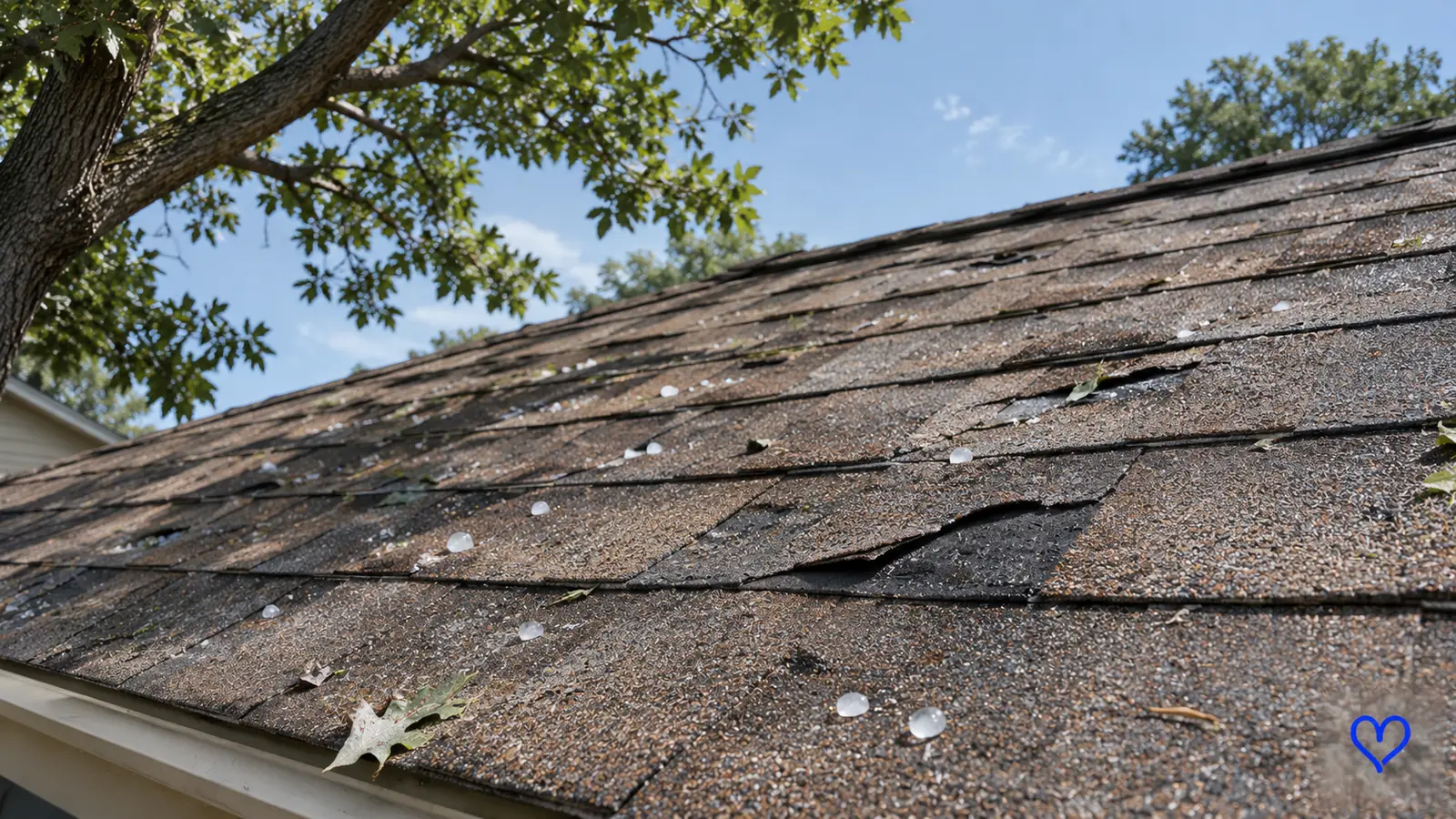
A sudden covered event is different from ongoing deterioration. Hail may damage a roof in a short period; sunlight, age, and deferred maintenance can affect shingles slowly over many years. An insurer needs information to distinguish the two. A roof's appearance alone does not establish that a particular recent storm caused all observed conditions.
Other possibilities include wind lifting shingles, a tree or falling object striking the roof, or water entering through a storm-created opening. Whether any loss is insured depends on the policy's covered causes and exclusions, including any separate wind or hail arrangement.
Weather-related damage versus ordinary wear
An old roof can have missing granules, brittle materials, cracked sealant, or prior repair areas without a single covered event having caused all of it. Maintenance and normal aging are generally distinct from sudden accidental damage under typical homeowners forms.
Consider a hypothetical house in El Paso with a roof that was installed fifteen years ago. After a hailstorm, a roofer observes some dents plus widespread preexisting wear. A claim evaluation might distinguish storm-related physical damage from ordinary aging. It would be misleading to promise that the entire roof must be replaced, or that every observed mark will be paid.
Replacement cost versus actual cash value for roofs
This distinction is critical. A policy using replacement-cost settlement for a qualifying roof loss may allow payment toward replacement with comparable materials, subject to the deductible, limits, and conditions to complete work. A policy settling roof losses on actual cash value (ACV) generally accounts for depreciation.
For an entirely invented example, assume covered replacement work is $16,000, depreciation is $5,000, and the applicable deductible is $3,000. Under a simplified ACV calculation, $16,000 minus $5,000 depreciation minus $3,000 deductible leaves $8,000. Under a qualifying replacement-cost arrangement, some of the $5,000 depreciation could potentially be recovered after required repairs and documentation. This is only illustrative arithmetic; actual contracts may calculate and pay differently.
TDI warns that some insurers change roof coverage at renewal as a roof ages. Do not assume an RCV dwelling label means the roof has no special endorsement. Read the roof-specific terms.
Wind and hail deductibles can be higher
Suppose a home has $320,000 in dwelling coverage and a hypothetical 2% wind/hail deductible. If that percentage uses the insured dwelling amount, the deductible equals $6,400. Even where the insurer recognizes covered roof damage, that amount matters before payment calculations.
| Roof question | Why it affects the decision |
|---|---|
| Was the damage caused by a covered event? | Cause of loss determines whether the contract responds. |
| What is the roof settlement basis? | ACV can subtract depreciation; RCV has its own conditions. |
| Which deductible applies? | Wind/hail terms may differ from other-perils deductibles. |
| Is cosmetic damage restricted? | Some endorsements treat appearance-only damage differently. |
| Are roof materials and age correctly stated? | Underwriting and terms can depend on accurate information. |
| Is there a separate windstorm policy? | Certain coastal homes may require a different arrangement. |
What should you do after discovering damage?
First, protect people and avoid climbing onto an unsafe roof. Document visible damage from a safe location and take reasonable steps to prevent further loss where appropriate. Keep receipts for temporary measures and contact your insurer about notification requirements. Do not make permanent repairs that unnecessarily erase evidence before understanding the claim process, unless needed for safety or mitigation.
Ask the insurer how inspections are scheduled, what documentation it needs, and how to submit a contractor estimate. An adjuster may inspect the property, review the reported event, and apply policy conditions before issuing a decision. Prompt reporting and accurate information can assist a claim, but do not guarantee payment.
Comparing a contractor estimate with the insurer's estimate
Contractors and adjusters may produce different measurements, line items, or assumptions. Ask for written scopes and clarification of any discrepancy. A supplemental estimate may be appropriate if new covered damage is identified during repairs, subject to the claims process. It is not automatically evidence of bad faith or a promise that every additional line will be approved.
Texas deductible law is important when hiring a roofer. The homeowner is responsible for paying the deductible required by their property insurance policy. TDI explains that a contractor cannot legally offer to waive, rebate, or absorb that deductible; an inflated repair estimate or credit used to disguise the amount could involve insurance fraud. Compare written bids and read the proposed contract carefully before signing. See TDI's direct consumer guidance on deductible-waiver offers. Be cautious of anyone who says insurance “owes” a new roof without reviewing the policy, and verify the contractor's business information, applicable credentials, materials, warranties, and payment arrangements.
How to discuss roof condition when shopping
An insurance application may ask the roof's age, material, recent replacement date, and observed condition. Be accurate and keep invoices, permits, or inspection records when available. Some insurers inspect roofs or ask for repairs before binding coverage. A company may offer a different deductible, ACV settlement, endorsement, or no offer depending on underwriting.
A newer roof does not promise a discount or guarantee eligibility. An older roof does not automatically mean every insurer will decline. Discuss the actual property, company requirements, and forms offered.
An inspection is not the same as a coverage decision
An inspector, roofer, and insurance adjuster can each play a different role. A roofer may document material condition and recommend repairs. An inspector may identify safety or maintenance concerns. The insurer applies the contract to the actual event and determines what, if anything, qualifies for payment. An inspection photograph or a contractor's recommendation alone does not establish that a loss is insured.
Keep a practical paper trail: note when you first discovered the damage, preserve weather-event details if available, photograph safely, and retain roof invoices and prior inspection reports. When reviewing estimates, distinguish replacement of physically damaged materials from optional upgrades, code-related work, and routine maintenance. Some building-code expenses may require specific ordinance-or-law coverage; do not assume they are included in every roof settlement. Those distinctions make it easier to ask informed questions without presuming a particular claim outcome.
Want to understand roof coverage before choosing a Texas homeowners policy? Contact Safe House Insurance to compare available quotes and review roof replacement-cost or ACV terms, wind/hail deductibles, and key exclusions. The insurer decides eligibility and the written policy sets coverage terms.
Sources

Safe House Insurance is an independent insurance agency in El Paso, Texas, licensed in Texas and New Mexico.
Have Questions About Your Insurance Options?
Our team can help you explore available coverage options based on your needs.